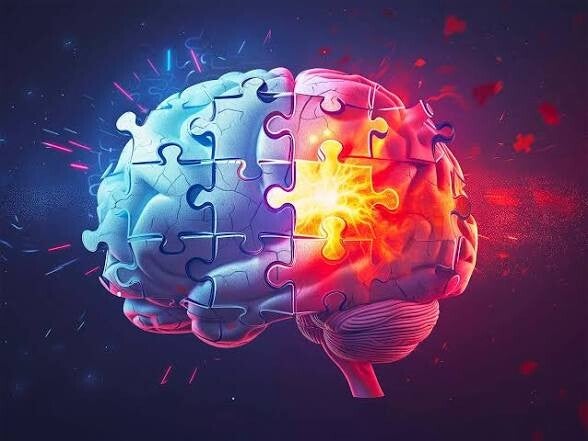
Unlock your mind with puzzles
Puzzles hold a lot of mental benefits and some are still being found. According to https://wesleychoice.org/the-surprising-benefits-of-puzzles-for-seniors/ which stated " A study published in the JAMA found that the more frequently adults participated in active mental activities, the greater the reduction in dementia and Alzheimer’s risk. Working on crosswords or other puzzles, and even playing games and cards sharpens your mental and cognitive acuity. Puzzles are good for the brain." That being said puzzles are medically good for you not just mentally.
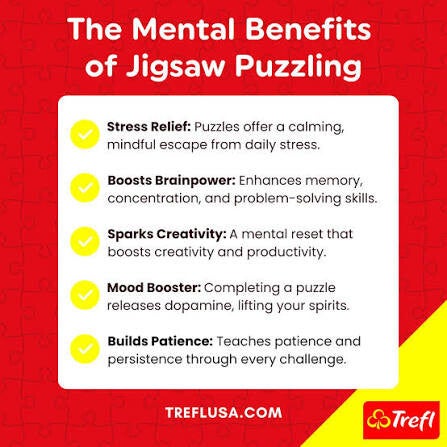
Mental benefits for all
Puzzles benefits such as creativity, sharpening minds, stress relief. Puzzles also hold so many good medical benefits as well helping with memory skills , depression and many other things that are still being medically researched and studied. According to https://pmc.ncbi.nlm.nih.gov/articles/PMC6174231/ " Jigsaw puzzling may provide two active ingredients (i.e., effective features) that benefit cognition: first, process-specific cognitive demands of jigsaw puzzling could contribute to an increased brain reserve (Gelfo et al., 2018), and second, regulation of distressing emotions through jigsaw puzzling could prevent chronic stress states that can exert a negative impact on cognitive aging and dementia in the long term (Lupien et al., 2009; Wilson et al., 2011)."
Puzzles have a purpose
Though puzzles hold many benefits, fiction puzzles focus on creativity with the imaginations. Its puzzles of made of imagination, creativity and joy. Fiction puzzles' main purpose is to release you from reality and give you an escape. These are thing that nonfiction just cant give use and there for though has it purpose is nothing like fiction. Yet we are gearing things more toward nonfiction puzzles and forgetting fiction.
Fiction puzzles are better
Fiction puzzles are way better to escape reality and help mentally. They are overall more fun to build compared to a nonfiction puzzle that's main purpose is to teach. I would rather build a puzzle on fairies in tree houses in the forest than a puzzle of the U.S.A map. Unless I need to be learning facts I have no interest in nonfiction puzzles. I have also found my students prefer fiction based puzzles from 3d to a 1000 piece puzzle of the polar express. Though give them a nonfiction puzzle in September and you might get half that puzzle back in May on graduation day. Most kids I have learned don't have near the amount of focus for a nonfiction puzzle that they have for a fiction puzzle. This is why I strongly believe fiction puzzles are a lot better and more fun than nonfiction puzzles and thus should not just be forgotten.
Create Your Own Website With Webador